
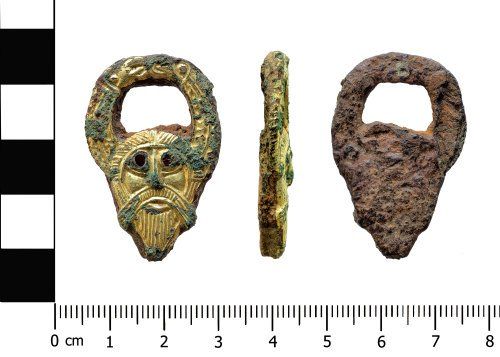
Woden Amulets and the Horned God in Anglo-Saxon Art
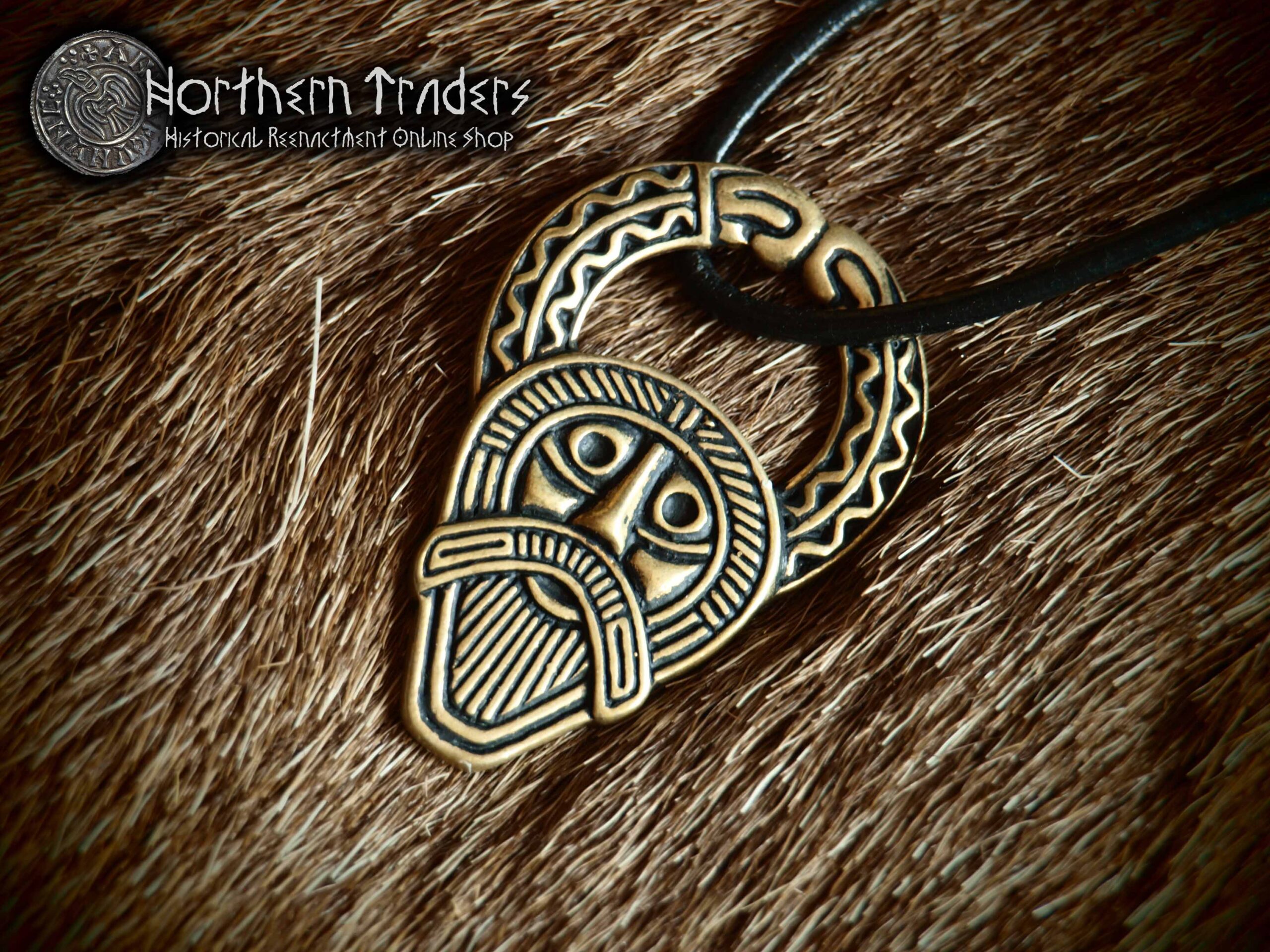
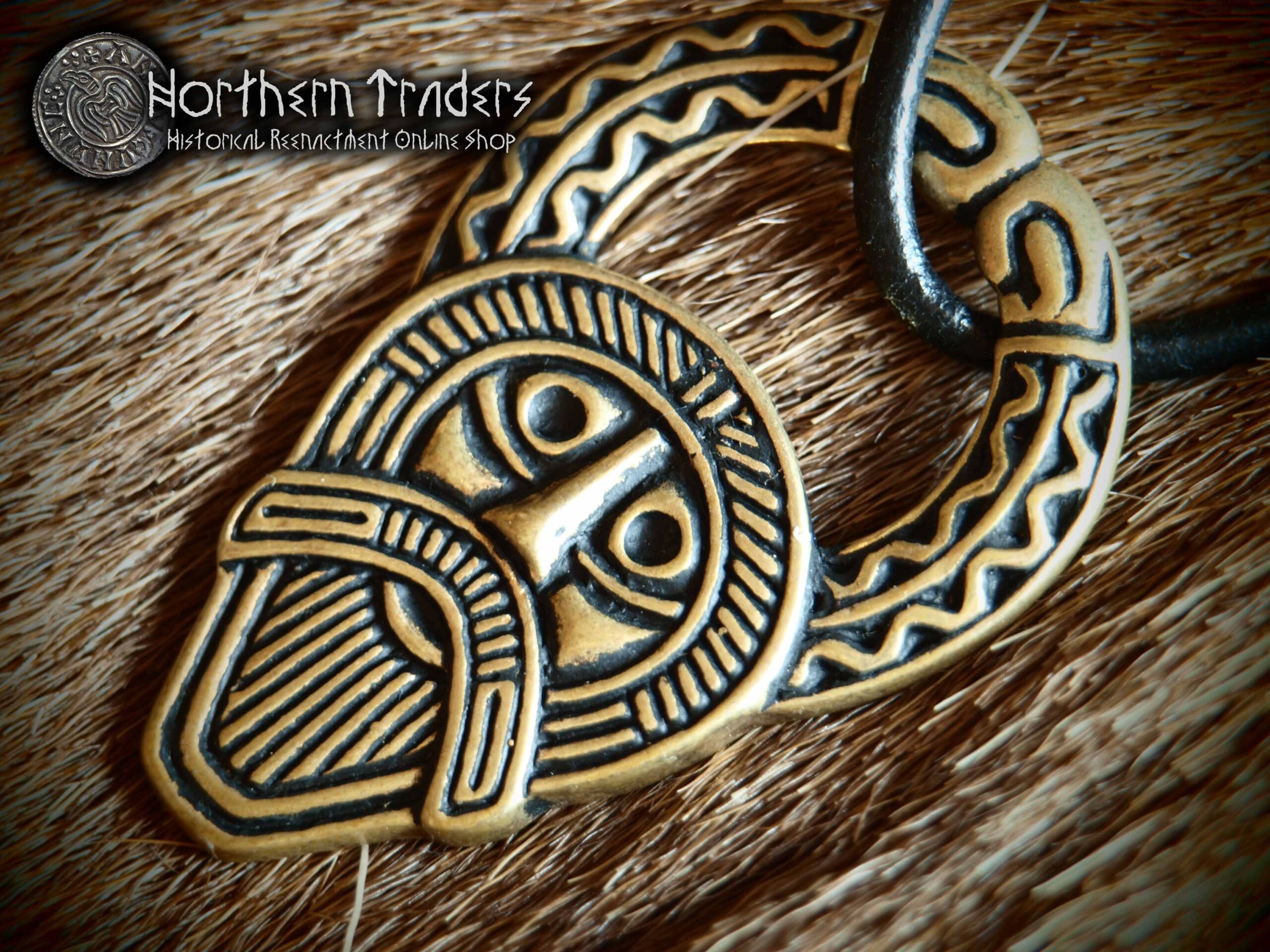
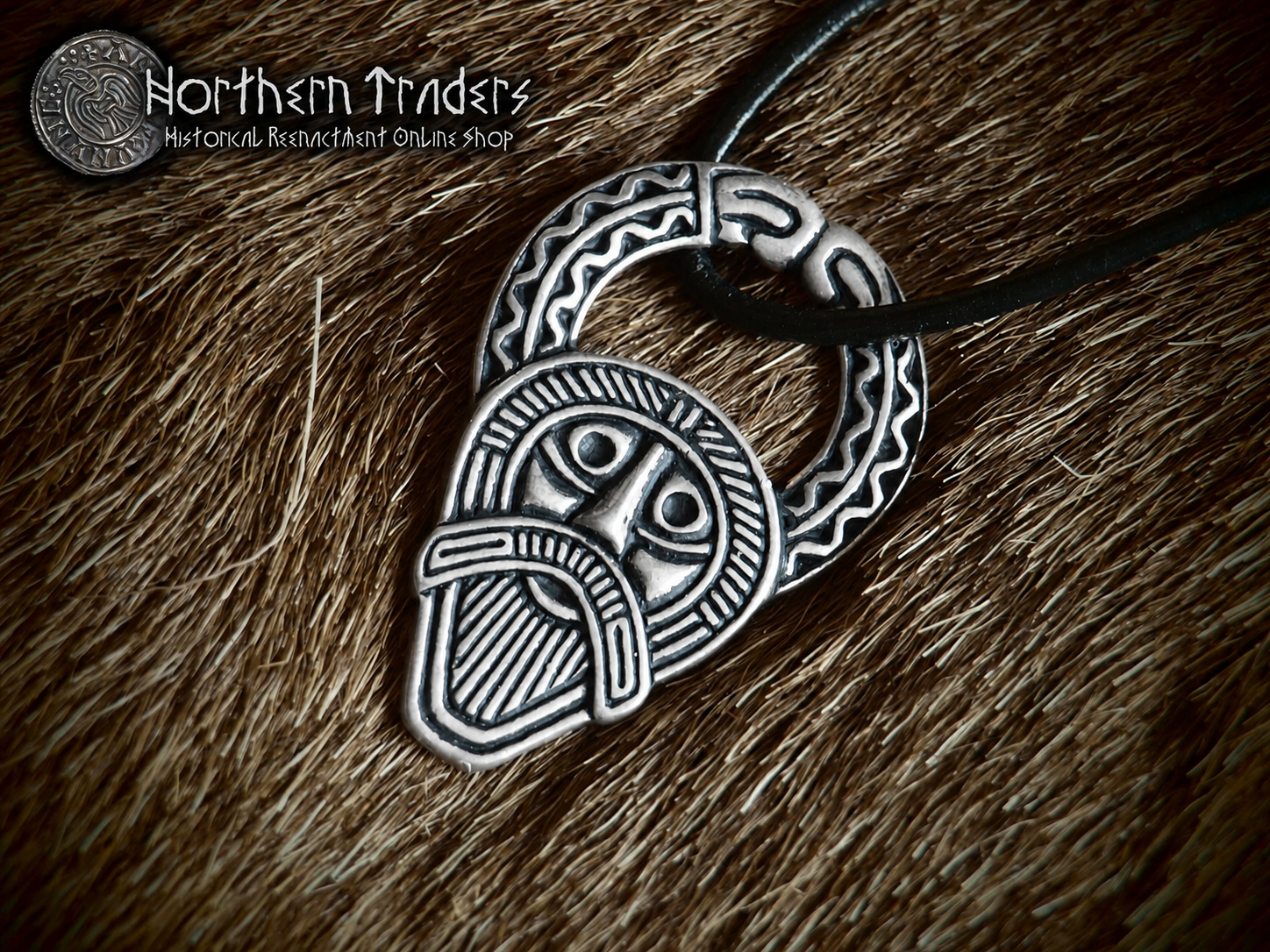
Anglo-Saxon pendants and fittings depicting bearded faces with horns ending in bird heads are known from numerous archaeological finds in England and Scandinavia, dating from the 6th and 7th centuries AD. This distinctive iconography appears in both the Anglo-Saxon world and the Vendel culture, the precursor to the Viking Age.
The motif of the horned figure can be seen on some of the most famous artefacts of the Early Middle Ages, including the Sutton Hoo helmet and the Finglesham buckle. Similar representations have also been discovered in Sweden and other parts of Scandinavia, demonstrating the widespread importance of this symbol throughout the Germanic world.
Most scholars interpret these figures as representations of Woden (Odin or Wotan), the chief god of the Germanic peoples. The bird heads at the ends of the horns are commonly identified as Huginn and Muninn, Odin’s legendary ravens, associated with wisdom, knowledge, and memory.
This rich symbolism makes Woden amulets among the most fascinating expressions of Germanic mythology and Early Medieval culture.
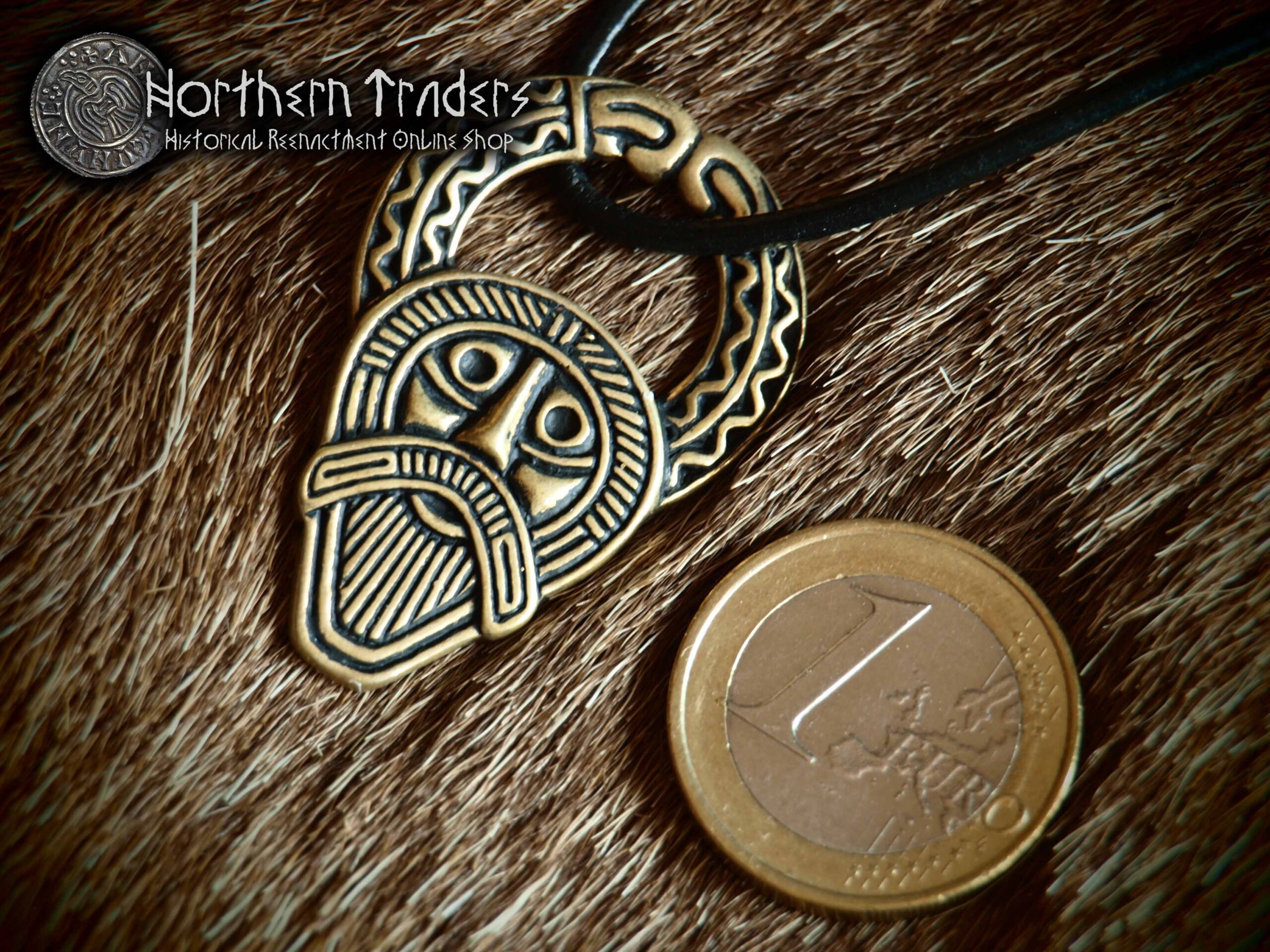
Measures: 3.8 x 2.5cm


Reviews
There are no reviews yet.